How ENRX turned its busiest buyers into its sharpest negotiators.

20M
Identified savings
60%
of buyer time freed

ENRX's buyers were excellent at the part of the job that mattered least, and had no time for the part that mattered most. Most of their week went to chasing order confirmations and keying changes into the ERP — work that, in a business like theirs, no one could afford to drop. The savings that could genuinely move the company sat on a list, waiting for hours that never came.

ENRX builds to order, and every order is a promise with a deadline

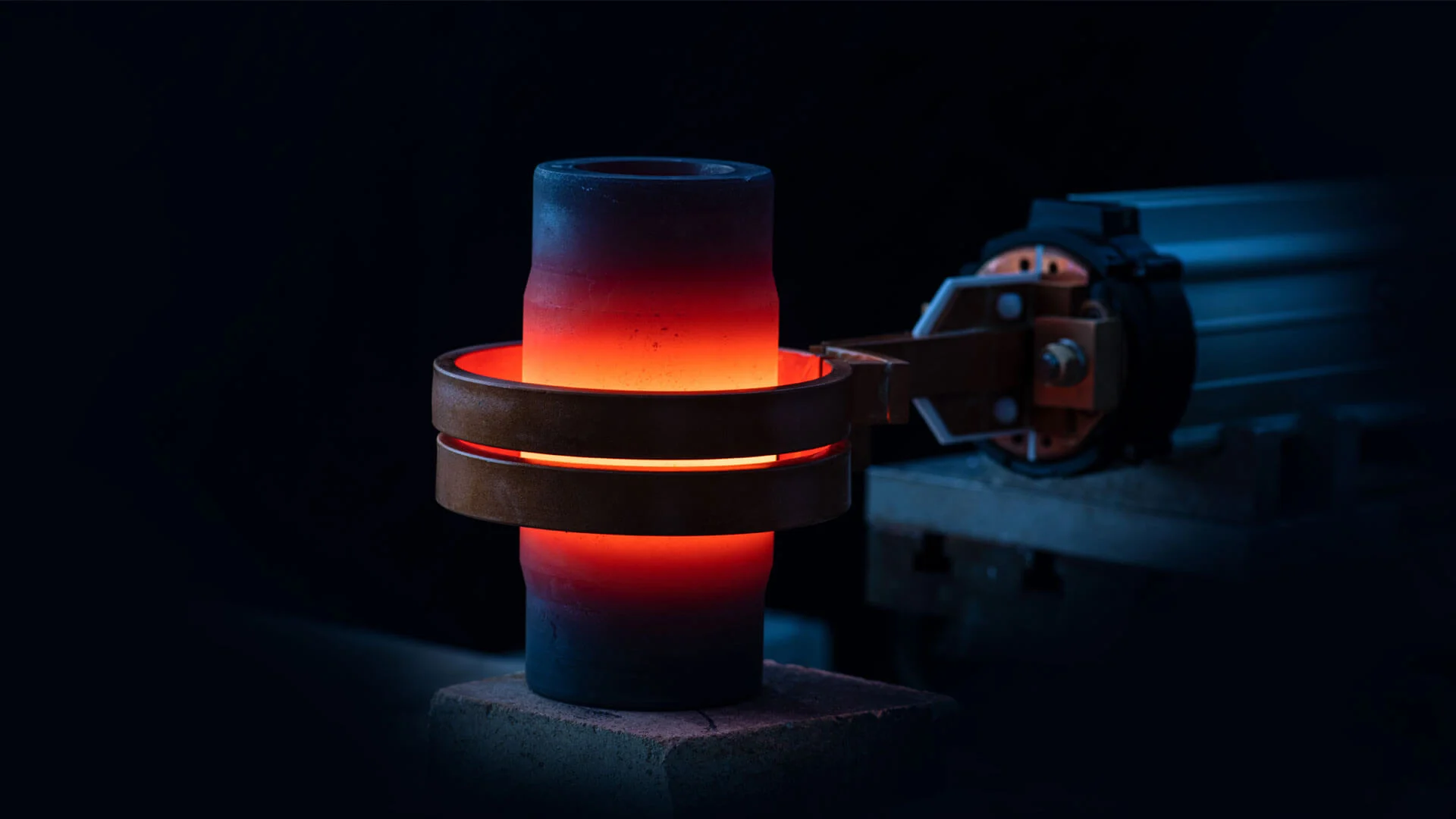
ENRX is one of the world's leaders in induction technology — induction heating, wireless charging, and contactless power supply — formed in 2023 from the merger of EFD Induction and IPT Technology, with roots in induction heating going back more than seventy years. Headquartered in Skien, Norway, and majority-owned by Arendals Fossekompani, the company runs manufacturing and R&D across Norway, Germany, the US, China and India, employs around 1,100 people, and is present in more than eighty countries.

Crucially, ENRX builds engineer-to-order. Its systems are custom-engineered for each customer — automotive lines, wind-turbine production, shipbuilding, tube and pipe — not pulled from a catalogue. That means sales close each deal against a committed delivery date, and the entire production schedule is built backwards from that promise. There is no buffer of finished goods to fall back on. The order *is* the plan.

When sales grow, procurement feels it first

Because the work is engineer-to-order, procurement runs on orders, not forecasts. You cannot pre-buy bespoke materials against a demand curve; you buy what each specific order requires, when it requires it. And every one of those materials has to be in place on time — if it isn't, production stops, and a delivery date the company already committed to is missed.

That makes growth a double-edged sword. Every additional sale is good news at the top of the funnel and direct, immediate strain at the bottom of it. More orders mean more committed dates, more bespoke materials that have to land exactly on schedule, and more confirmations to chase to closure. As volume climbed, the procurement team absorbed the pressure first — and the obvious response, hiring more buyers, would only have scaled the chasing, not removed it.

The savings were real — an EY study proved it — and entirely out of reach

This is the part that made the situation so frustrating. The opportunity was not in doubt. An EY study identified at least 20% in potential savings across ENRX's spend through negotiation and supplier consolidation — and as much as 50% on some of the largest categories. The savings were mapped, quantified, and waiting. What was missing was never insight. It was time.

Negotiating well, and consolidating suppliers properly, is demanding work. It takes preparation, focus, and the ability to hold a position through several rounds. None of that survives in the gaps between confirmation emails — and in an engineer-to-order business, those emails always win, because a dropped confirmation risks a missed deadline. So the team stayed heads-down on keeping orders moving, and the savings stayed exactly where they were: identified, within reach, and uncaptured, quarter after quarter.

60% of buyer time spent keeping orders moving — not capturing value

The Order Confirmation Agent took the loop off the team

ENRX put Riff's Order Confirmation Agent on top of the systems they already ran — no rip-and-replace, no migration, no new platform for the team to learn. The agent took over the confirmation loop end to end: reading each supplier reply, interpreting it against the order, writing updates back to the ERP, and surfacing only genuine discrepancies for a person to judge.

What had been the buyers' entire day became something that simply ran. The team stopped acting as processors of routine confirmations and became reviewers of the exceptions that actually warrant human attention — the cases where judgment changes the outcome and a missed detail would have cost a deadline. The deadline insurance kept running; it just no longer required the team's hours to do it.

The capacity it freed now goes straight at the savings

With roughly 60% of their time returned, ENRX's buyers can finally do the work the savings depended on. The negotiations and consolidation EY had pointed to — perpetually deferred because there were never enough hours — are now work the team has the capacity to prepare for and see through. The 20M stopped being a number in a study and became a target the team can actually pursue.

"Our buyers were spending 40–60% of their week chasing and handling order confirmations by hand. Riff's AI agent takes that work off them, so the team can focus on negotiations and other cost saving initiatives."Even Børhaug, Managing Director, ENRX

This is only the start. Confirmation was the first loop to go because it cost the most time for the least judgment — but in an engineer-to-order business there are many such loops. The same pattern, deterministic work handled by an agent so people are freed for the work that needs them, now extends to the next bottleneck, and the next.

Discover what Riff can do for you

Find out how Riff can help you build a more predictable and efficient supply chain.

How ENRX turned its busiest buyers into its sharpest negotiators. — Riff